
Frequently Asked Questions:
How do you clean a baby's teeth?
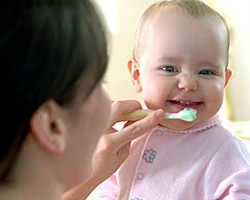
Plaque bacteria can be removed with a toothbrush. A soft-bristled toothbrush with a small head, preferably one designed for infants, should be used three times a day.
Are baby teeth really that important to my child?
Baby teeth serve many purposes. They allow a child to speak properly and to chew. They also provide the framework for the permanent dentition.
Can I prevent baby bottle tooth decay?
Yes, there are several practices that will help prevent the type of tooth decay termed "baby bottle tooth decay." Since this type of decay is usually caused by the frequent and long-term exposure of a child's teeth to liquids containing sugars, measures can be taken avoid these extended exposures.
1. Never allow children to fall asleep with a bottle in their mouth that contains milk, formula, juice or other sugar-based liquids.
2. To help establish healthy teeth and aid in teething, you can clean and massage your baby's gums.
3. Upon the eruption of the first baby tooth, you should begin plaque removal techniques, brushing your child's teeth using a soft toothbrush.
4. Your baby's first visit to the dentist should be between the age of six and 12 months.
Tooth Brushing
Children’s hands and mouths are different than adults. They need to use toothbrushes designed for children. Both adults and children should use brushes with soft, rounded bristles for gentle cleaning. Change to a new brush about every three months.
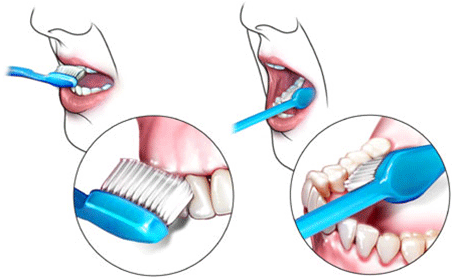
Wipe infant’s teeth gently with a moist, soft cloth or gauze square. As babies grow, use a child’s toothbrush with a small, pea-sized dab of toothpaste. By age 2 or 3 begin to teach your child to brush. You will still need to brush where they miss. Dentists and hygienists often advise children to use a gentle, short, back and forth motion to remove plaque. When children are older they can switch to this method.
(1) Hold the brush at an angle (45 degrees) towards teeth and gums. Move brush back and forth with short strokes, about a half tooth wide.
(2) Brush the inside and outside surfaces of each tooth, top and bottom.
(3) Hold the brush flat on top of the teeth and brush the chewing surfaces.
(4) Gently brush the tongue to remove debris.
(5) Floss between teeth daily.
When should we begin using toothpaste and how much should we use?
When a child is 2-3 years of age floridated toothpaste should be introduced.
Before this time parents should clean the child's teeth with water and a soft-bristled toothbrush. After the age of 2-3, parents should supervise brushing and make sure the child uses no more than a pea-sized amount on the brush.
Children should not swallow excess toothpaste after brushing.
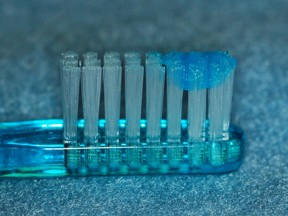
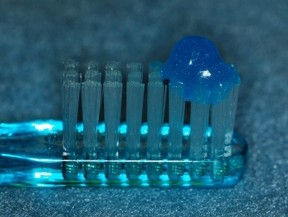
a smear of toothpaste a pea-size of toothpaste
Is my child getting enough fluoride?
Your dentist may prescribe flouride supplements if your child is not getting enough through drinking water. If your child primarily drinks bottled water without fluoride this may be necessary. Ask your dentist for an evaluation if you are concerned.
How often does my child need to see the dentist?
In order prevent cavities and other dental problems a check-up is recommended every six months.
Your dentist can tell you when and how often your children should visit based on their personal oral health.
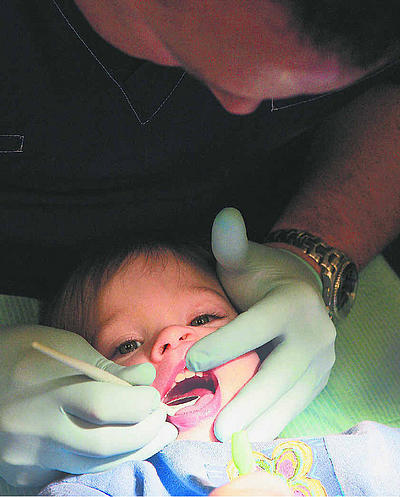
How can I protect my child's teeth during sports?
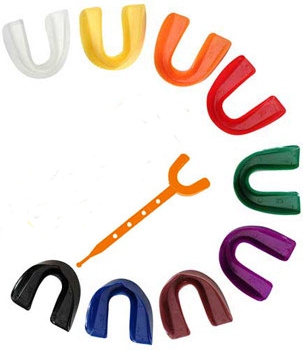
Plastic mouthguards can be used to protect a child's teeth from sport related injuries. A custom mouthguard developed by a dentist will protect your child from injuries to the teeth, face and even provide protection from severe head injuries by providing a small cushion for shock absorbing.
How can I help my child remain cavity-free?
The American Academy of Pediatric Dentistry advises that your child should brush with a fluoride toothpaste twice a day. They also suggest that you floss your children's teeth once a day until they are able to do it themselves - around the age of 10.
They recommend that your child get enough fluoride and have sealants applied to the chewing surface of permanent back teeth or molars soon after they come in.
In addition, they suggest moderate snacking - only twice per day.
What are dental sealants?
Dental sealants protect the chewing surfaces of back teeth where cavities occur most often for children.
Sealants, composed of clear or shaded plastic, are painted onto the tiny grooves in the molars.
By "sealing out" food and plaque, sealants reduce the risk of tooth decay. Sealants can be quickly and painlessly applied to any permanent teeth that are likely to develop decay on the biting surface.
When Will My Baby Start Getting Teeth?
Teething, the process of baby (primary) teeth coming through the gums into the mouth, is variable among individual babies. Some babies get their teeth early and some get them late. In general the first baby teeth are usually the lower front (anterior) teeth and usually begin erupting between the age of 6-8 months.

Eruption Of Your Child’s Teeth
Children’s teeth begin forming before birth. As early as 4 months, the first primary (or baby) teeth to erupt through the gums are the lower central incisors, followed closely by the upper central incisors. Although all 20 primary teeth usually appear by age 3, the pace and order of their eruption varies.
Permanent teeth begin appearing around age 6, starting with the first molars and lower central incisors. This process continues until approximately age 21.
Adults have 28 permanent teeth, or up to 32 including the third molars (or wisdom teeth).
414 East Main Street
Durham, NC 27701
919.560.7680
